
Saving Money and the Environment by Recycling and Donating
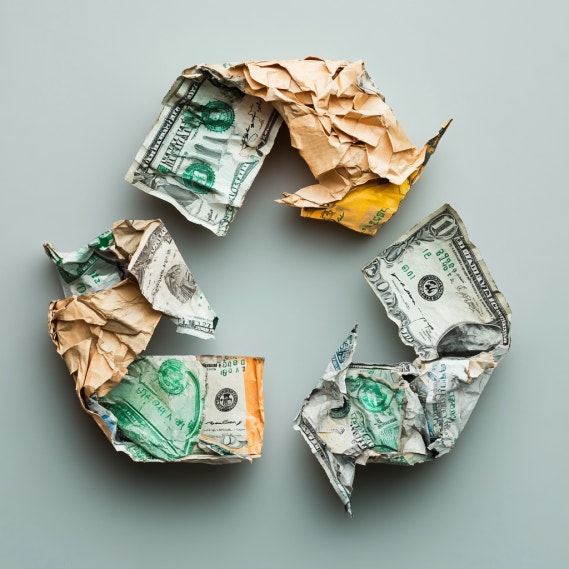
Everyone knows that recycling can play a big role in helping to preserve the environment for future generations. More people than ever are being careful to make sure that they recycle all of their plastic and paper materials, but one material that often goes overlooked is textiles. Clothing is all too frequently tossed into the garbage, from where it will eventually wind up in a landfill.
Many people don't realize it, but clothing is a considerable factor when it comes to humanity's expanding waste problem. Whether people outgrow things or simply move on to the latest fashion trend, a staggeringly large amount of clothing is sent to landfills every year. But it doesn't have to be. There are several outlets available for recycling and donating your clothing that can go a long way toward cutting back on pollution and other harmful environmental factors. Plus, recycling your clothing can be a great way of saving some money while you save the environment.
Recycling Clothing Can Have a Big Environmental Impact
One of the main reasons clothing is often overlooked when it comes to recycling is that many people don't realize just how much of an impact it's having on our environment. By observing the raw data, people can get a better idea of just how significant of a problem it really is.
According to the EPA, 17,030 tons of textile waste was generated in 2018 and only 2,510 tons of that was recycled. A total of 11,300 tons of textile waste was eventually sent to a landfill. Even more alarming is that these numbers have been steadily increasing year after year ever since 1960. In that year, only 1,760 tons of textile waste was generated.
Recycling Clothing Can Reduce Greenhouse Gases
Most clothing out there is made using organic materials such as cotton and linen, so in theory, it should be biodegradable. In practice, however, it's not quite so simple. When clothing is sent to a landfill, it's often buried under mounds of garbage. This deprives the organic material of the oxygen needed to successfully break down. Instead, the clothing is broken down by various microorganisms using anaerobic digestion. This process produces methane gas that is harmful to the environment and air quality.
Recycling Clothing Reduces Landfill Overflow
More than 10 tons of textiles are thrown out each year, and every pound of that winds up in a landfill. This causes landfills to expand and their harmful environmental effects to increase. Additionally, this expansion can have a detrimental impact on the municipal budgets of landfill-operating counties and can lead to problems for entire communities. Recycling your clothing can help reduce landfill overflow as well as the costs associated with it.
Recycling Clothing Can Help Those Who Need it Most
Recycling your clothing doesn't only help the environment; it also helps your neighbors. There are several organizations around the globe that happily accept donated clothing so that it can be passed on to those in need. This could be as local as your neighborhood thrift shops or as global as clothes being sent overseas to other countries.
Recycling Clothing Limits Consumerism
While it may not be for everyone, many people have chosen to embrace a minimalist lifestyle. This means buying less and placing greater value on what you already own. Those who choose to live life in this fashion often get rid of large amounts of clothing when they make the transition. By recycling unwanted clothes and only buying what's needed moving forward, these individuals can have a large impact on the amount of textile waste produced each year. This helps limit environmental harm while also saving them a significant amount of money that would've been spent on new outfits.
Recycling Clothing Conserves Energy
Clothing production uses a lot of energy. Each piece of clothing produced goes through a manufacturing process that requires large amounts of water and energy to keep running. By recycling your clothing, you can help limit the use of this energy, since every article of clothing won't have to be created from nothing. Your old clothes can be used to make brand new ones.
Recycling Clothing Is Easy
Perhaps the best reason to recycle your clothes is that it's easy. Dropping your clothes off at a donation center or shelter only takes a few minutes, and the positive impact it can have is significant.
Places to Donate Your Used Clothing
- Buy Nothing Project: The Buy Nothing Project allows you to donate clothes as well as other goods and services to people right in your community.
- Freecycle: Freecycle is a nonprofit organization that helps users to donate their clothing and other goods to people all around the globe.
- Soles4Souls: Soles4Souls takes shoe and clothing donations and sends them to those experiencing homelessness all across the U.S.
- Dress for Success: Dress for Success provides women with donated professional attire to assist them in finding a career and gaining financial independence.
- Cinderella's Closet: Cinderella's Closet takes formal dress donations and provides them to girls who could otherwise not afford one for their prom.
- American Red Cross: The Red Cross is a humanitarian organization that will take your clothing donations and use them for causes such as disaster relief.
- Salvation Army: The Salvation Army is one of the most well-known charity organizations in existence.
- Big Brother Big Sister Foundation: The Big Brother Big Sister program pairs adult mentors with at-risk children and will accept clothing donations for those in their program.
- Planet Aid: Planet Aid is dedicated to creating a sustainable world and accepts clothing donations for men, women, and children.
- The Arc: The Arc is a community organization that advocates for those with intellectual and developmental disabilities. They accept donations in many forms, including clothing.
- Goodwill: Goodwill accepts clothing donations for their thrift stores all across the U.S. that can help low-income families find what they need at a low cost.
- Savers: Savers is a thrift store that accepts clothing donations and helps local nonprofit organizations conduct their own clothing drives as well.
- Rescue Mission Alliance: Rescue Mission Alliance accepts clothing donations for those in need.
- Free the Girls: Free the Girls is an organization that accepts bra donations for survivors of sex trafficking.
- One Warm Coat: One Warm Coat is a nonprofit organization that accepts coat donations and gives them to adults and children in need for the winter months.
- Vietnam Veterans of America: The VVA is an organization that helps support Vietnam War veterans and accepts donations of clothing and other household items.
- Becca's Closet: Becca's Closet takes prom dress donations and gives them to high school girls who can't afford their own.
- Room to Grow: Room to Grow is a charity that takes donations of baby clothes and provides them to children in need.
- Project G.L.A.M.: Project G.L.A.M. donates prom dresses, makeup, and accessories to underprivileged young women for their senior prom.
- ThredUP: ThredUP allows users to buy and sell secondhand clothing and also allows them to donate their clothing to a charity of their choice.
Additional Information on Recycling and Sustainability
- How to Compost: Whether you're a beginner or an expert, this site can teach you everything you need to know about composting.
- How to Recycle Old Electronics: Learn how to recycle all of your old electronic devices in a safe and sustainable way.
- What Is Sustainability, and Why Is it Important? This page helps break down exactly what sustainability is and why it matters.
- Upcycling: A Fad or the Future? This article explores the viability of the process behind upcycling.
- How Does Electronics Recycling Work? Read about the process behind recycling electronics and why it's important to understand.
- Composting 101: Find out how you can help the environment by recycling your old food and organic waste.
- A Guide to Sustainable Living: Use this guide to help you develop a sustainable lifestyle.
- What Is Upcycling? Read all about the process of upcycling and how it can benefit the planet.
- 25 Ways to Save Water: Cut back on your water waste with these 25 helpful tips.
- Reduce Wasted Food at Home: Learn how you and your family can cut back on the amount of food you waste at home.
- How to Conserve Water: This page explores how you can reduce your water use and how doing so can help the environment.
- Electronics Recycling: What You Can and Can't Recycle: Discover which of your electronics are safe to recycle.
- Understanding Energy Conservation and its Many Benefits: Find out why energy conservation is so crucial to establishing a sustainable environment.
- Saving Energy Improves Americans' Health and the Environment: This article explores how saving energy can help the environment and improve the health of American citizens.
- Sustainable Living Tips: Learn how to live a more sustainable lifestyle with these helpful tips.
- Ten Ways to Save Water at Home: Follow these simple methods to cut back on your water use at home.
- 12 Ways to Live More Sustainably: Discover how to live a sustainable life with these tips from the Center for Biological Diversity.
- Seven Tips to Recycle Better: Recycle as efficiently as you can with these helpful tips from Earthday.org.
- How to Recycle and Why You Should Do It: Explore the many benefits of recycling with this informative article.
Close
About The Author

Founder and CEO, CouponFollow
As the Founder and CEO of CouponFollow, Marc has a passion for helping consumers save time and money while shopping online. He’s been a bargain and deal hunter since the early 2000s.