
A Historical Timeline of Money
While money and currency have evolved through the years, the concept has remained the same. Money is something of value that can be exchanged for something else. But when was money invented? And when did the modern paper and coin currency we use today become popular? Let’s explore the history of money from the earliest civilizations all the way to modern-day currency.
Early Forms of Currency
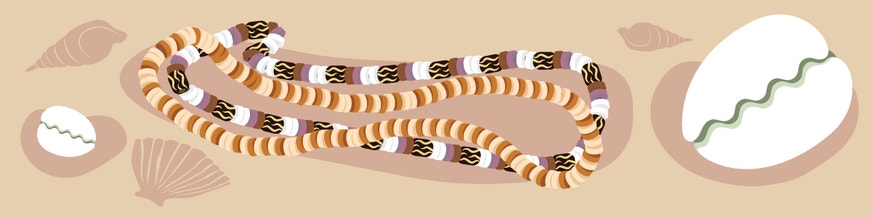
The history of currency is hard to pinpoint. Many people think that bartering was the earliest form of currency use before the origin of money, but anthropologists have found that if societies bartered, it was with strangers and not fellow members of their community. In the early years of civilization, it was common for edible resources like cattle, grain, and vegetables to be treated as currency. However, these often were not bartered but rather given as a part of a gift economy. In a gift economy, goods or services are given without any explicit trade agreement. This was generally done to improve communities as a whole. It was beneficial to keep neighbors safe and fed so that if their services were needed at a later date, they would be available to help.
Shell money was also very popular in many parts of the world. This usually consisted of partial or whole sea shells and would commonly be crafted into beads or shaped into jewelry. Cowry shells were a popular form of currency in many different areas of the world. These shells, found in the waters of the Pacific and Indian oceans, were popular as currency in Southeast Asia and parts of Africa. In West Africa, they were usually threaded onto long strings of 40 cowries or put into pouches. They were not very convenient for larger amounts of money.
- The Cowrie Shell: Monetary and Symbolic Value: A history of using cowrie shells as currency in West Africa
- The Myth of the Barter Economy: A breakdown of why bartering may not have been as prevalent in ancient times as originally thought
- Gift-Giving in Ancient Egypt as an Economic Feature: A summary of the gift-giving economy in ancient Egypt
600 B.C.: The First Coins
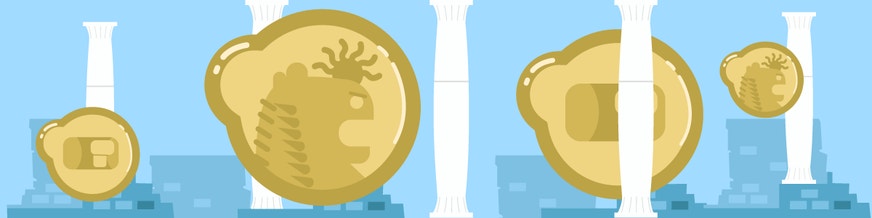
China began to manufacture metallic cowries as a form of currency during the Bronze Age. These early metal coins are often thought to have been the precursor to coins we use to this day. Metal tools like knives and spades were also used as currency in China.
Many historians say that the first group to create coins was the Lydians, residents of a region in what is now Turkey, around 600 B.C. Their coins were made of electrum, which is an alloy of silver and gold, and often had the head of a lion imprinted on them. It took time before these coins were commonly used for commerce, as they were too valuable to be used to purchase everyday necessities like bread. Even the smallest denomination coin was worth about one day’s wages.
- Lydian Gold Considered First Coins in the World: A history of the first coins of Lydia
- A Case for the World’s Oldest Coin: Lydian Lion: A comprehensive history of the Lydian lion, considered by many to be the first coin in the world
- Coins of the Ancient Lydian Kingdom: A look at some of the coins of ancient Lydia
500 B.C.: Ancient Greek Coinage
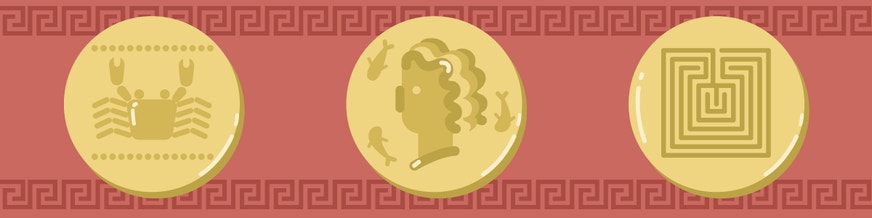
It wasn’t until the ancient Greeks started creating coins that they were used for everyday spending. The first Greek coins were likely made in Aegina. They were made of silver and included an image of a turtle to symbolize the city’s maritime trade history. Soon after, the cities of Athens and Corinth also began crafting coins. While the coins were eventually used for commerce, they were mainly created as a means to pay soldiers. The Greeks needed to create a method of payment that could be applied equally to all people, and coins were consistent.
Other forms of trade, like bartering, remained popular, particularly for maritime trade, as there was no consistency between the coinages of different city-states. But coins were popular among citizens who lived in the same territory. Some larger municipalities, like Athens, were able to impose their coins on other areas, making it more convenient to buy goods and services there. This explains why some ancient Greek coins have been found as far away as Egypt and Palestine.
Coins in ancient Greece were typically made of silver, but sometimes, gold, copper alloy, bronze, and electrum were used. These were melted and poured into molds or vessels to keep the size and weight of all coins consistent. An engraver would create a design on a metal die. The metal coin would be warmed slightly to make it soft and put on the die, and then the coin-minter would strike it so that the design left an impression on the coin.
City-states often chose specific designs to represent their cities on coins. Images of gods and goddesses from Greek mythology as well as local plants and flowers were popular choices for designs. These are some of the common coin designs associated with Greek cities:
- Athens: Athena
- Knossos: Labyrinth from the legend of the Minotaur
- Syracuse: Arethousa
- Aegina: Sea turtle
- Corinth: Pegasus
- Thebes: Boeotian shield
- Poseidonia: Poseidon
- Olympia: Nike
- Rhodes: Rose
- Selinunte: Celery leaf
- Melos: Apple
- Ephesus: Bee
The unique composition of ancient Greek coins is helpful to archeologists and numismatists, as the metal composition and minting methods can help them date and geographically place where the coins originated.
- Ancient Greek Coins: 15 Classical Coins by City: These are some of the most iconic coins in Ancient Greek history.
- Greek Coinage: A brief history of coins in ancient Greece
- Reading Ancient Greek Coins: A guide to how to read and understand the markings on common Greek coins
800–1300 A.D.: The Creation of Paper Money

When was paper money invented? The first roots of paper money appeared in China during the Tang Dynasty. Merchants were looking to avoid the bulk of heavy coins on their trade routes and created receipts of deposit in their stead. They were used as a form of IOU for when payment could be made at a later date.
However, it wasn’t until the Song Dynasty in the 11th century that real paper money, called jiaozi, was introduced. Citizens would put their coins in special trade deposits and be given paper notes in return. The printing factories that created these notes used woodblocks and several different colors of ink. The notes were often imprinted with pictures and symbols in honor of the emperor, key people in the country, and landscapes. There were printing stations in four different cities: Chengdu, Anqi, Hangzhou, and Huizhou.
By 1265, the currency was standard all around the empire. It was also backed economically by either silver or gold. In order to combat counterfeiters, the inks were made out of different plants and fibers. This helped deter would-be counterfeiters from trying to replicate them. They were also stamped with multiple banknote seals to make them more difficult to copy.
While the currency eventually failed, another paper currency option followed right after. Kublai Khan, the founder of the Yuan Dynasty, was such a fan that he created his own version called jiaochao. His enthusiasm for the currency was shared by Venetian explorer Marco Polo, who brought the concept back to Europe.
- Paper Money in Pre-Modern China: A history of paper currency and jiaozi in China
- How Chinese Mulberry Bark Paved the Way for Paper Money: A look at Marco Polo’s experiences with Kublai Khan’s paper currency
1500 A.D.: Currency of the Indigenous North Americans

Meanwhile, in North America, many tribes of indigenous people were creating their own forms of currency. Potlatches were a gift-giving custom practiced by natives of the Pacific Northwest in Canada and the United States. A potlatch was a feast with gift-giving held for major occasions such as weddings, births, and other life events. The gift-giving tended to get out of control very quickly, as the gifts were used to represent a leader’s power and wealth. Leaders would constantly try to one-up each other by giving lavish gifts. In addition to the feasting and gift-giving, potlatches also included dancing, music, singing, storytelling, games, jokes, and speeches. While potlatches were temporarily banned in Canada from 1884 to 1951, some elements of the tradition are still practiced today.
Shell money was also popular in North America at this time. One of the most famous examples of shell money is wampum traded by Native Americans in the Northeastern United States. Wampum consisted of beads made from whelk shells that were common in the area. The shells were typically rounded by artisans and strung together for convenience. Wampum was considered legal tender in the Northeast, as Native Americans used it to trade with the colonists into the mid-17th century. Unfortunately, Dutch colonists began mass-producing wampum, which caused inflation. This led to the disuse of wampum.
- Potlatch: A look at the history and common customs of potlatches
- The Potlatch Ban: The history of the potlatch ban of 1884 in Canada
- From Beads to Bounty: How Wampum Became America’s First Currency — and Lost its Power: All about the rise and fall of wampum in the United States
1816 A.D.: The Gold Standard
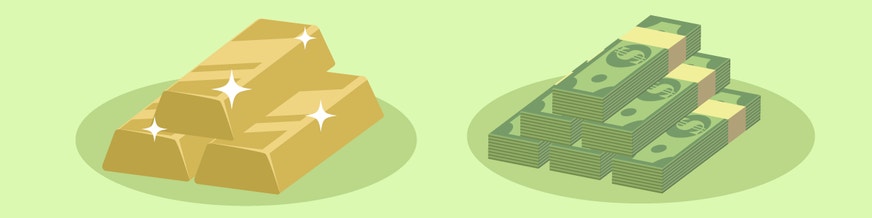
Prior to the 18th century, most currency was based on the silver standard. The silver standard is a system in which the standard monetary unit is a specific weight of silver. Silver was used much more commonly around the world, specifically in much of Europe and the Mediterranean region. In fact, this is still reflected today in the name of the United Kingdom’s pound sterling.
In 1816, Great Britain introduced the gold standard with the creation of the gold sovereign by the new Royal Mint. Paper currency and banknotes had been used in Europe for many years before this, but this was the first time they were tied to gold.
The Gold Standard Act was passed in the United States in 1900. The act was signed by President William McKinley on March 14 and made the gold standard the de facto standard in the country, joining other major European countries. It fixed the value of the U.S. dollar at 25⅝ grains of gold at 90% purity. Many other countries at this time pegged their own currency to the gold standards of the United Kingdom or the United States, including Mexico and Japan. By 1908, only Hong Kong and China remained on the silver standard.
During World War I, many countries began to pause or abandon the gold standard. The United Kingdom and the rest of the British Empire ended the gold standard at the beginning of the war but went back to it afterward. Many economists blame the gold standard for the Great Depression, citing years of economic mismanagement. The Great Depression was the worst economic depression that the world had ever seen and lasted more than a decade. In 1933, the United States abandoned the gold standard, as many people were hoarding gold in a panic during the depression.
- What Is the Gold Standard? A detailed explanation of how the gold standard has been used around the world over the years
- Gold Standard: The history of the gold standard from the Library of Economics and Liberty
- How Did the Gold Standard Contribute to the Great Depression? A look at how the gold standard is one of the factors that could have caused the Great Depression
1887 A.D: The History of Coupons

As consumers were continually trying to find ways to save money on their everyday expenses and splurges, coupons became very popular. The first company to issue a coupon is thought to have been Coca-Cola. Asa Candler, founder of the Coca-Cola Company, came up with the idea to offer a free glass of Coca-Cola to consumers. He placed coupons in magazines and mailed them to customers. It’s estimated that between 1894 and 1913, more than 8,5000,000 free drinks had been distributed as a result of the coupons. This promotion transformed Coca-Cola from an unknown drink company to a major player in the beverage game.
After the Great Depression, many Americans were struggling financially. During this time, major chain stores offered coupons in newspapers and magazines to help encourage shoppers to spend money. This practice was generally disliked by smaller mom-and-pop stores that were not able to provide discounts at such a scale.
By the 1950s, coupons were so prevalent that a group called the Nielsen Coupon Clearing House was created in order to regulate and distribute coupons to consumers. Now, popular coupons can be printed out at home and digital discount codes are available for online purchases. Many shoppers take advantage of this by practicing “extreme couponing,” which is the act of using as many coupons as possible to save as much money as possible.
- The History of Coupons: Learn how coupons have evolved through the years
- Hard Times Turn Coupon-Clipping Into the Newest Extreme Sport: A look at how extreme couponing became a competitive activity
1944 A.D.: The Bretton Woods System and Nixon Shock
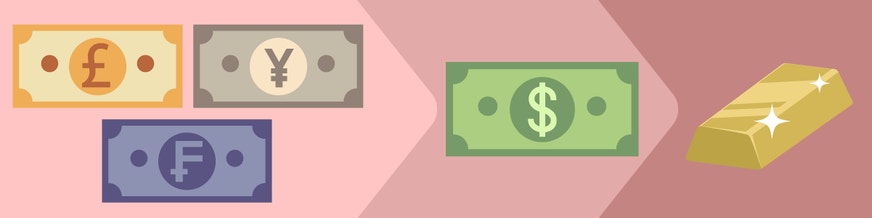
In 1944, representatives from 44 different countries held a meeting in Bretton Woods, NH, in order to create a new international monetary system. The hope was that this new system would provide economic stability and ensure economic growth around the world. This system came to be known as the Bretton Woods system. It allowed countries to settle their accounts in dollars that could be converted to gold at a rate of $35 per ounce. The United States would back every dollar with gold, and the countries’ currencies would be pegged to the U.S. dollar.
This new monetary system worked well shortly after World War II. Unfortunately, in the 1950s and 1960s, growing debt from the Vietnam War and inflation caused by the Federal Reserve led the U.S. dollar to become increasingly overvalued. In 1966, banks outside of the United States held $14 billion, yet the U.S. had just $13.2 billion worth of gold to back it up, only $3.2 billion of which was available for foreign holdings. In the 1970s, countries like West Germany and Switzerland began to pull out of the system and demand gold reserves for their dollars.
In order to recover the value of the dollar, President Richard Nixon met with Federal Reserve Chairman Arthur Burns and other Treasury advisors at Camp David on Aug. 13, 1971. Nixon outlined a plan that would help create better jobs, protect the U.S. dollar, and slow increases in the cost of living in the country. This led to the dissolution of the Bretton Woods system and the gold standard as we know it.
- Creation of the Bretton Woods System: A detailed history of the meeting in Bretton Woods and how the system came to be
- Nixon and the End of the Bretton Woods System: An explanation of how Nixon ended the Bretton Woods system
- Nixon Ends Convertibility of U.S. Dollars to Gold and Announces Wage/Price Controls: How Nixon’s announcement changed economics in the United States
Present-Day Money

Now that countries were no longer tied to the gold standard, many currencies became floating currencies, meaning their values could fluctuate in response to events occurring in the foreign exchange market.
Later in the 20th century, payment cards like debit and credit cards became the most popular way for consumers to buy products in the First World. In 1958, Bank of America released its BankAmericard (later known as Visa), which was the first consumer credit card program. Payment cards allow consumers to purchase goods without using physical currency. The charges are either debited from the consumer’s bank account or charged to a line of credit to be paid off at a later date. By the 2000s, most money existed as digital currency.
As the evolution of money progressed, online payment systems became popular. The first platform to appear was PayPal. While the company was originally established as security software developer Confinity in 1998, by 1999, the first version of the PayPal payment system was released. Shortly after the company went public, it was acquired by online auction website eBay in 2002, but it was spun off into its own publicly traded company in 2014. Other similar online payment systems like Venmo and Cash App allow consumers to send money to others digitally, and these are some of the most popular mobile apps.
- The History of Credit Cards: How credit cards came to be, starting with the earliest forms of credit
- Credit Cards vs. Debit Cards: A breakdown of the distinctions between credit and debit cards
The Future of Currency
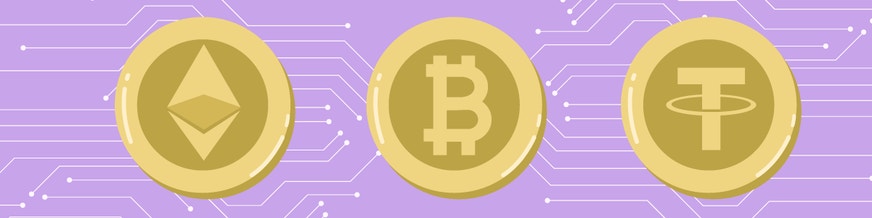
When people talk about the future of currency, it is inevitable that cryptocurrencies come up. Cryptocurrencies date back to 1983, when American cryptographer David Chaum created electronic money called eCash. However, it wasn’t until 2009 when Bitcoin, the first decentralized cryptocurrency, was created that cryptocurrencies entered popular culture. Each cryptocurrency’s validity is provided by something called a blockchain, which is a continually growing list of records or data (known as blocks). Each block has its own timestamp and hash pointing to the previous entry, making it resistant to modification or forgery.
Cryptocurrencies are “created” by mining. Mining is how new cryptocurrencies are brought into circulation, but it also helps maintain the blockchain. Mining cryptocurrencies is a long process and generally requires a large amount of equipment. By setting up a mining system, investors are periodically rewarded with a cryptocurrency coin. These coins are stored in an online wallet, where they can later be sold or spent.
Bitcoin is the most popular form of cryptocurrency and the one that most people have heard of. It has the highest market capitalization of any cryptocurrency. The next most popular form of cryptocurrency is Ethereum. Ethereum is the most actively used blockchain and was developed in 2015 by programmer Vitalik Buterin. There are currently thousands of cryptocurrencies out there, and we will likely see more of these types of currency in the future.
- Blockchain, Explained: A detailed overview of how a blockchain works
- What to Know About Cryptocurrency and Scams: A guide to protecting yourself from online cryptocurrency scams
About The Author

Founder and CEO, CouponFollow
As the Founder and CEO of CouponFollow, Marc has a passion for helping consumers save time and money while shopping online. He’s been a bargain and deal hunter since the early 2000s.